Chloramine is Not the Answer
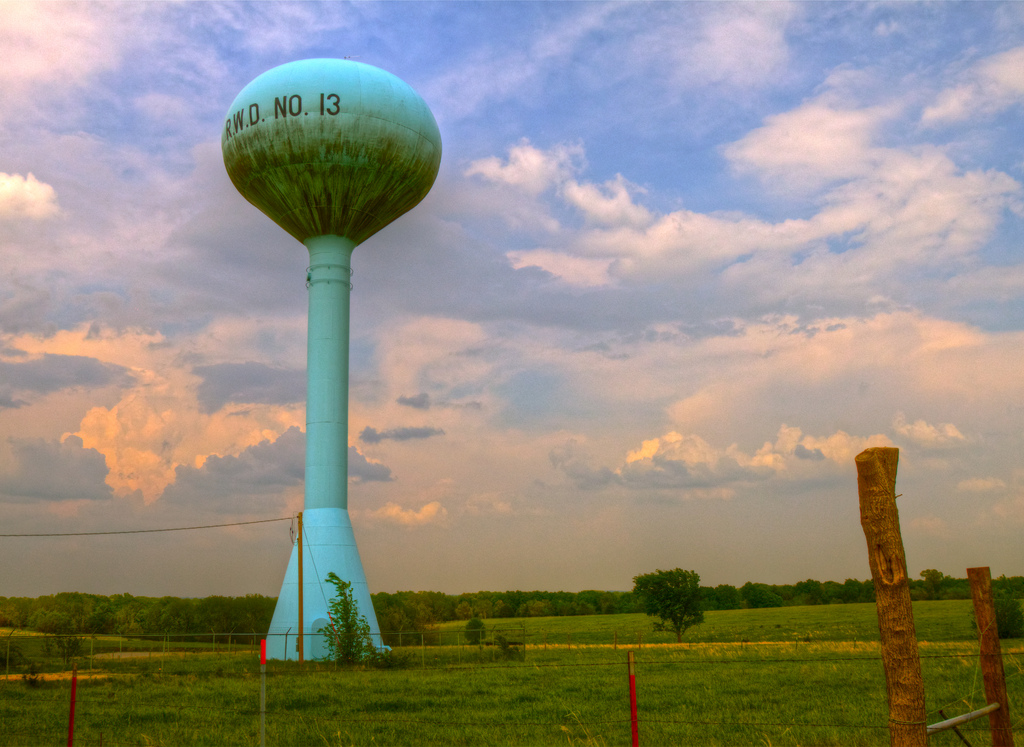
Regardless of the effectiveness of water treatment efforts, poor conditions in distribution system storage tanks can decrease the quality of finished water. In order to prevent this from occurring, regular inspection and cleaning of storage tanks is essential and mandated in most states. Doing so regularly protects not only water quality and safety, it protects the asset from hidden corrosion and degraded coatings.
Dirty Tanks Degrade Water Quality
Dirty tanks can cause a variety of problems in water, including:
- Health risks from bacteria hidden in silt and biofilms
- Taste and odor problems
- Dirty water complaints
- Elevated disinfection by-products
- Consume chlorine residuals
Cleaning Regulations and Recommendations
State regulations covering water storage tank inspection and cleaning vary. While some states require the draining and cleaning of tanks every three to five years, others require annual tank inspection without any mandatory draining or cleaning. Regardless of government regulations, regular inspection and cleaning of water storage tanks is still recommended. In fact, according to the AWWA Manual of Water Supply Practices, metal water storage tanks should be drained, inspected, cleaned and thoroughly disinfected at least once every three years. In areas where excess sediment is a known problem, the AWWA recommends annual cleanings. Keeping water storage units clean offers many benefits to consumers and operators alike, including:
- Fewer consumer health risks
- Fewer customer complaints
- Improved water quality
- Reduced treatment expenses by eliminating disinfectant demand
- Fewer unplanned expenses
If operators are opposed to a regular inspection and cleaning schedule, they can determine whether cleaning is needed by monitoring the disinfection levels of the water that enters and exits a storage facility in order to determine if additional cleaning is needed. In fact, utilities can even invest in a continuous monitoring system that will detect problems such as fluctuating temperatures and increased turbidity as soon as they occur. Although this type of system is typically expensive, it provides immediate results and can greatly reduce the chances of dirty water being delivered to customers and pay for itself in preventative maintenance.
Methods of Water Tank Inspection and Cleaning
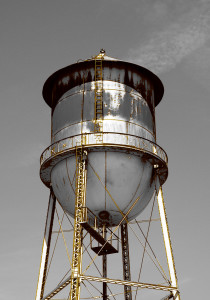 Cleaning and inspection methods will vary based on several factors, including the accessibility of tanks and water stress. However, some of the most common methods of inspection and cleaning include:
Chemical Cleaning
Chemical cleaning is one of the best ways to completely clean a water storage tank. This method may use a number of chemicals ranging from sophisticated cleaning formulas to simple acids. Keep in mind that, although simple acids are less expensive than other chemicals, they may cause damage to the walls of the tank. Depending on the chemicals utilized, as well as other factors, the cost of chemical cleaning ranges from $3,000 to $6,500. Over the past few years, advanced chemical cleaning with NSF standard 60-certified chemical formulations have been developed to effectively clean tanks while minimizing downtime and structure damage. These low pressure spray on/spray off chemicals provide a fast, convenient and safe method to remove biofilm and scale from tanks.
Power Washing
The interior of tanks can be power washed to remove accumulated biofilms. Before this method can be utilized, the tank must first be drained. In order to reach the highest portions of the tank, crews may need to use scaffolding. Power washing is typically less expensive than chemical cleaning, with costs ranging from $3,000 to $5,000. However, it does not remove biofilms or scale as effectively, leaving a potential for regrowth. Power washing can also damage tanks in some cases by damaging coatings or pitting concrete that then provides biofilms additional attachment points.
Divers
Divers can inspect a tank and remove sediment without draining it first. This method is less expensive than either chemical cleaning or power washing, with typical prices ranging from $1,500 to $3,000. However, this method also has limits. Because divers are tethered to an air source outside of the tank, they cannot move freely. Removing biofilms is difficult for divers, and cleanings performed won’t be as effective as they would be with more expensive methods. Divers can remove sediment in tanks but cannot clean wall surfaces that are significantly greater than floor surfaces.
Remotely Operated Vehicles
The least expensive tank inspection and cleaning method involves the use of Remotely Operated Vehicles, or ROVs, to vacuum sediment. This method costs only $500 to $1,500, depending on the size of the tank and if sediment removal is included. ROVs can be utilized without draining the tank. However, because the ROV cannot reach all areas of the tank, thorough inspection and cleaning won’t be possible in these areas and ROVs cannot clean wall surfaces either, similar to the drawback of tank divers. Likewise, because ROVs are not able to thoroughly remove surface attachments, even areas that can be reached by the ROV may not be cleaned completely. Finally, unless the project includes sediment removal, ROVs typically avoid the bottom of the tank, where disturbed sediments may affect the turbidity of the water.
DOWNLOAD IMPROVED CHLORINE RESIDUALS AFTER TANK CLEANING
Photo credit: davedehetre / Foter / CC BY-NC
Photo credit: kevin dooley / Foter / CC BY
There are estimated to be 12,000-17,000 water tanks across the New York City skyline. Recent samplings taken by the New York Times at just twelve of the water towers found E. coli in five of the tanks. The positive results came from the bottom of the tanks, below the pipe that feeds the buildings’ taps. Public health experts claim this is a concern because the water circulates throughout the inside of the tanks.
Stephen Edberg, a public-health expert from Yale, warned the New York City Department of Health and Mental Hygiene stating that, “If any part of the tank gets contaminated, all of it is contaminated.”
Health officials in New York City insist that the tanks are safe, and that there are adequate governing laws. Nearly $700,000 in fines have been levied against buildings that did not meet the city’s regulations from 2010-2012. On top of that, 60% of building owners do not ensure that their tanks adhere to city regulations.
To read the full article in the New York Times, click here.
<div “=””>
Today, we announced the third patent received for our Clearitas scale control solution. This patent adds significantly to Blue Earth Products because it is for a highly concentrated end-product made in a way that varies from the previous methods developed for the last 40 years. Strategically, Blue Earth Products is now positioned to release Clearitas in markets worldwide and engineer new product versions for applications such as food processing, agriculture, legionella control and potential use in the oil and gas industry. In addition, concentrated Clearitas variants are tailored to suit large-scale water systems that require high volume bulk delivery and easier handling. Read the press release below…
Blue Earth Products® Obtains Product by Process Patent For its Highly Concentrated, Clearitas® Scale Control Solution
Patent validates Blue Earth Products’ manufacturing method in creating a stabilized mixed oxidant solution for deposition control in all water systems as the first of its kind in the water treatment industry and extends the Company’s exclusive rights to Clearitas facilitating entry in global markets.
Las Vegas, NV – February 18, 2013 — Blue Earth Products (https://blueearthproducts.com), a specialty chemical research and development company that uses chemical innovation to solve water infrastructure issues, today announced that the United States Patent and Trademark Office has granted U.S. Patent No. 8,617,403 for a new, highly concentrated and stabilized version of the Company’s Clearitas® scale control solution. Specifically covering the product by its proprietary manufacturing process, this award closely follows two U.S. patents relating to Clearitas granted in 2013, No. 8,366,939 and No. 8,518,270, both directed to methods for reducing scale in water systems. U.S. Patent #8,617,403 represents the third patent for Clearitas products and the 13th patent obtained by the Company.
Under this patent, Blue Earth Products receives comprehensive protection for the invention of its highly concentrated, stabilized mixed oxidant solution designed to attack the organic and inorganic scale that adheres to pipe walls and other wetted surfaces in utility and commercial water systems. Engineered with a novel manufacturing process, Clearitas is the result of an advanced electro catalytic chlor-alkali process, which transforms a chlorine molecule into a highly oxidative state. Its unique, oxidizing properties actively break down the polysaccharide layer that shields biofilms from traditional disinfectants like chlorine, thus eliminating anchor sites for bacteria and scale formation. With continued use, Clearitas prevents future biological growth and can eliminate microbiological induced or under-deposit corrosion in any water system. This patent certifies that the concentrated Clearitas end product is produced utilizing a distinctive process that departs from previous manufacturing methods developed over the past 40 years.
Strategically, Blue Earth Products is now positioned to release Clearitas in markets worldwide and engineer new product versions for applications such as food processing, agriculture, legionella control and potential use in the oil and gas industry. In addition, concentrated Clearitas variants are tailored to suit large-scale water systems that require high volume bulk delivery and easier handling.
“Again, Blue Earth Products has focused on simplifying operational complexity for utilities, commercial applications, and industrial users. Because over 80% of all corrosion in any water system is related to microbiological activity, and buildup of scale and biofilms are the leading culprit, elimination of these in a cost-effective manner has an inestimable economic impact on cities, building owners, and industrial users globally,” said Dane Madsen, CEO of Blue Earth Products. “Further, Blue Earth Products has now developed the first meaningful alternative to the use of phosphates in water systems to manage corrosion that costs over $30 billion annually in the U.S. alone, and risk further degradation to the ecosystem because they promote watershed degradation if not removed. Once more, Blue Earth Products listened to the markets and delivered.”
The suite of Clearitas patents received since 2013 represents a significant achievement for Blue Earth Products as a leader in the water treatment industry. The Company, committed to the science of safe water, has invested millions in research and development to solve the problem of scale and biofilm buildup in water systems.
Currently, Clearitas is the only EPA-registered scale control disinfectant. There are ten product versions formulated for utility, agricultural, commercial, and industrial water systems including hospitals and healthcare and food processing facilities. For product inquiries, please contact Info@BlueEarthLabs.com or 1-800-259-4456.
Clearitas® is a registered trademark of Blue Earth Products, Inc.
About Blue Earth Products
Blue Earth Products, a chemical research and development company, develops advanced cleaning and maintenance solutions to assist commercial facilities in providing safe, clean water. The Company’s NSF 60 certified products are specifically engineered to extend the operational life and efficiency of any water infrastructure by removing organic and inorganic contaminants both online and off-line. Founded in 2010, Blue Earth Products combines chemistry with commitment, innovation and expertise to deliver simple, cost-effective water infrastructure solutions to customers across the globe. Visit BlueEarthLabs.com for more information.
Check out this video of our product, neXt®, in action by our partner, Plastic Pipe Fabrication (PPF, a division of E.J. Prescott). This video shows the use of neXt in pressure vessels at Templeton, MA’s municipal water plant.
We are excited to announce that the State of California has officially approved the use of Clearitas 350 as a primary disinfectant for healthcare facilities. See the press release below.
BLUE EARTH PRODUCTS® RECEIVES REGISTRATION CERTIFICATE FOR CLEARITAS® 350 SCALE CONTROL SOLUTION BY STATE OF CALIFORNIA
Validates Disinfectant Power of Clearitas® 350 for Two-Pronged Attack of Persistent Pathogens such as Legionella in Healthcare Facilities
Las Vegas, NV – August 1, 2014 – Blue Earth Products (www.BlueEarthLabs.com), a leading specialty water chemical research and development company building an innovative chemical platform to solve water infrastructure issues, today announced that its Clearitas 350 scale control solution has been approved as a primary disinfectant for healthcare facilities by the State of California, Department of Pesticide Regulation. Clearitas 350 is the stable patented product of an advanced electrocatalytic chlor-alkali process that removes deposits that allow legionella to effectively colonize in any water system and when used as a primary disinfectant, it kills harmful bacteria such as Escherichia coli, Salmonella enterica serovar Choleraesius, Pseudomonas aeruginosa, and other antibiotic-resistant bacteria – all pathogens commonly harbored where scale and biofilm deposits have been allowed to accumulate in building water systems. NSF 60 certified, Clearitas 350 is non-hazardous, easy for operations management staff to handle, and safe to use in drinking water. Currently, Blue Earth Products offers the only EPA-registered scale control solution that may be used as a primary disinfectant.
In compliance with California laws and regulations applying to pesticide regulation, Clearitas 350 can be utilized as the only source of disinfection in cleaning and maintain safe water operations in a healthcare facility that are not receiving sufficient disinfectant residuals from their water supplier. The oxidizing properties of Clearitas uniquely breakdown the polysaccharide layer that shields biofilms from traditional disinfectants like chlorine. Clearitas removes the anchor sites for bacteria in existing systems and minimizes reattachment, preventing future biological growth in the water system with continued use.
In conjunction with its U.S. EPA registration, extensive research has been conducted on Clearitas 350, which included a full battery of independent lab testing performed in EPA-approved labs. After the disinfectant efficacy was thoroughly examined, the U.S. EPA determined that Clearitas 350 achieves the high standard of bacterial disinfection. California further processed the data to effect its registration.
“Because the state of California has a rigorous set of standards, their approval of Clearitas 350 is a testament to the products’ effectiveness in controlling scale and eliminating harmful bacteria in building water systems,” said Jason Peters, Vice President of Product Development, Blue Earth Products.
Requiring only a standard chemical pump, Clearitas is the least intrusive and most cost-effective disinfectant, applied as quickly and effortlessly as bleach, requiring no additional training. As a NSF 60, non-hazardous corrosion and scale control disinfectant solution, Clearitas is safe for drinking water and improves overall water quality. Other product versions require a primary disinfectant like chlorine to be dosed in addition to the application of Clearitas.
Specifically formulated for legionella prevention, Clearitas 350 is used by hospitals and long-term healthcare facilities in remediating legionella and other waterborne pathogen problems and preventing future occurrences by removing the deposits that harbor pathogens like legionella. Vital to any healthcare facilities’ legionella risk management plan, Clearitas 350 actively reduces opportunities for legionella growth, disrupting the environment where it thrives, improving the likelihood that every end-point of use – faucets, showerheads, drains, water fountains, etc. – dispenses clean, safe water.
“California, who arguably generated the foundation of the EPA, and holds all suppliers of public health solutions to a higher standard, has agreed with Blue Earth Products that Clearitas 350 is an effective and efficient manner of managing healthcare water system, a source of significant risk to patients and staff alike. Our customers demanded this validation, and we delivered again, “ said Dane Madsen, CEO of Blue Earth Products.
For product inquiries, please contact info@blueearthlabs or 1-800-259-4456.
About Blue Earth Products
Blue Earth Products, a chemical research and development company, develops advanced cleaning and maintenance solutions to assist commercial facilities in providing safe, clean water. The Company’s NSF 60 certified products are specifically engineered to extend the operational life and efficiency of any water infrastructure by removing organic and inorganic contaminants both online and off line. Founded in 2010, Blue Earth Products combines chemistry with commitment, innovation and expertise to deliver simple, cost-effective water infrastructure solutions to customers across the globe. Visit BlueEarthLabs.com for more information.
We are thrilled to announce the appointment of Jeff Englum to Regional Sales Manager of the Midwest. His deep water industry expertise will benefit current and potential customers in this region. Here is today’s press release…
JEFF ENGLUM JOINS BLUE EARTH Products’ SALES TEAM
Englum Brings 35 Years of Sales Experience to Regional Sales Manager Role
LAS VEGAS – Blue Earth Products (www.BlueEarthLabs.com), a leading specialty water chemical research and development company building an innovative chemical platform to solve water infrastructure issues, today announced that industry sales veteran, Jeff Englum, has joined its sales team as Regional Sales Manager. His 35 years of sales experience combined with a deep knowledge of the water treatment industry will enable him to develop relationships with customers and partners and provide support for Blue Earth Products’ suite of advanced cleaning products.
In his role as Regional Sales Manager, Englum will be responsible for utility and commercial customers and distributor relationships in the Midwest. He will be based out of his home office in central Indiana.
“Jeff is a great addition to our growing sales team, and he has already made a big contribution with his process water expertise,” said Ken Juillet, Vice President of Sales, Blue Earth Products.
Previously, Englum worked for Wesco Distribution, Inc. as an independent industrial sales representative. At Wesco, he built a new sales territory driven by business development in an extremely competitive industrial sales marketplace and introduced Wesco to the municipal and private water treatment industry. As a consultant for Innovative Chemical Resources, Englum provided sales strategy and business development consulting services to start-up industrial chemical companies. He was also the Vice President of Sales and Plant Operations at National Environmental, Inc. where he expanded sales to seven states and achieved double-digit sales growth annually. As Senior Area Manager of BetzDearborn, he managed the sales team for industrial water treatment, chemical and equipment and grew his territory by 2000%.
Englum received a Bachelor of Science in Chemistry and Biology from Indiana State University.
About Blue Earth Products
Blue Earth Products, a chemical research and development company, develops advanced cleaning and maintenance solutions to assist commercial facilities in providing safe, clean water. The Company’s NSF 60 certified products are specifically engineered to extend the operational life and efficiency of any water infrastructure by removing organic and inorganic contaminants both online and off line. Founded in 2010, Blue Earth Products combines chemistry with commitment, innovation and expertise to deliver simple, cost-effective water infrastructure solutions to customers across the globe. Visit BlueEarthProducts.com for more information.
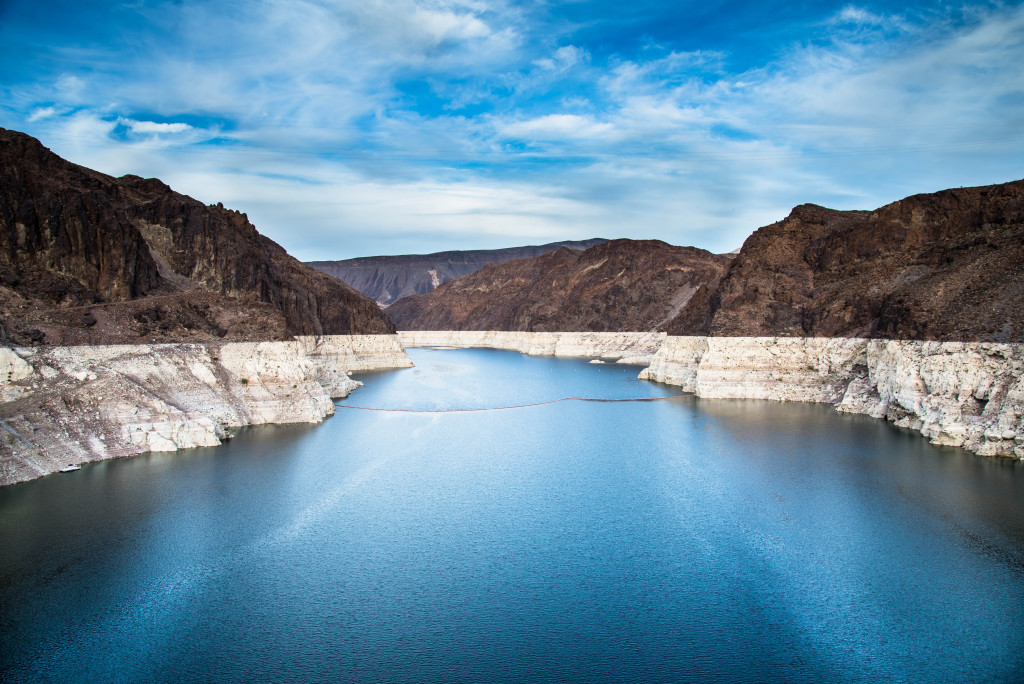
Drought. For some regions, it is becoming the new normal. Simultaneously demand from increased population, agriculture, and commercial use continues to rise. Utilities, more than ever, have to make every drop count.
In many ways, drought creates a series of defeating scenarios for your water system and your revenue. Managing your utility, running your treatment plant, maintaining the distribution system does not take fewer people just because you have less source water to treat. If anything, it takes more time to manage a scarce resource and make every drop count. At the same time, you may have had to initiate voluntary, or worse, mandatory, water use restrictions, cutting back on customer usage and cutting deeply into your “billable” water, your revenue.
But it gets worse. Drought and the water restrictions that often accompany it have another impact – increased water age in your distribution piping. That increased water age may make it difficult to maintain your chlorine residual. You know how critical that residual is to maintaining the health of the drinking water you provide. So, you do what you know you have to do – you flush the lines. There goes that precious resource, your revenue, right down the storm drain.
Flushing – visible and a public relations nightmare.
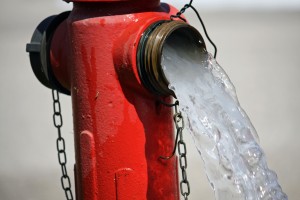 Your customers drive by your flushing crews and are suddenly irate. The calls start coming in. “What is going on? You ask me to cut back, to not water my lawn! My grass and landscaping, that I paid dearly for I might add, is dying before my eyes. I only flush my toilets once a day (and that stinks – literally). Yet here you are sending all that water to the storm drain!? Oh, and did I just hear you are considering raising my water rates because you are selling less water? Are you serious?”
Your customer service staff tries to explain the importance of maintaining a chlorine residual, that it is for their health….but their explanations fall on deaf ears. Your customers don’t understand, nor do they care, about chlorine residuals. The water seems fine to them. All they know is you are asking them to conserve and it is costing them dearly. Yet here you are doing EXACTLY what you are asking them NOT to do – WASTE WATER!
What is worse? You know that flushing will become more frequent, not less, the longer this drought continues.
News flash – flushing does not get to the root cause of low residuals.
Okay, you know this. Flushing may restore chlorine residuals for a time, but flushing alone does not solve the root cause of low chlorine residuals. The root cause is chlorine demand that comes from deposits in the line – biofilm, sediments, and scale – those natural deposits that build up in every distribution system. To make matters worse, while consuming chlorine and driving down residuals, these deposits create another headache – disinfection by products (DBPs).
Flushing alone is not effective in removing these deposits. Biofilms are protected by polysaccharides that hold the mass together like glue, cementing those biofilms in place and keeping the bacteria safe from disinfection. Even increasing your chlorine residual, in an attempt to kill them, is not very effective at removing these organic deposits and drives up DBP formation.
Fortunately, there is a better way.
Blue Earth Products engineered a powerful solution called Clearitas®, which attacks the root cause of low residuals, those deposits and the polysaccharide glue that holds them in place, and breaks them down. Then, you can finally flush these organics OUT of your system. Maintaining a low dose of Clearitas® in your system keeps these deposits from reforming.
Result? You maintain your chlorine residuals and reduce DBP formation, improving the health of your water. Equally important, you reduce the need for flushing and do what you are asking your customers to do, make every drop count.
By keeping your lines cleaner, you may even reduce the friction in the distribution system and reduce your energy costs.
Safe, effective, economical.
Safe for your customers. Safe for your crew. Clearitas® is NSF 60 certified as a water supply additive and is considered non-hazardous to health by the OSHA Hazard Communication Standard (29 CFR 1910.1200). Clearitas® does not change the corrosivity of the water, nor affect lead and copper levels.
Blue Earth Products offers a complete line of Clearitas® products and will help you select the one that is right for your system, based on your unique water chemistry and deposits. All Clearitas® products offer the same results:
- Improve the condition of your infrastructure piping
- Reduce flushing – make every drop of revenue water count
- Maintain chlorine residuals – improve the overall water quality and assure the health of your consumers
- Reduce DBP formation – stay in compliance and provide safer, higher quality water
So stop flushing your revenue down the drains.
You owe it to yourself to learn how Blue Earth Products helped South Jackson County, WVA reduce their chlorine demand and DBP formation to stay in compliance, reducing the need for flushing. Download the case study below to find out how it all happened within in a matter of months.