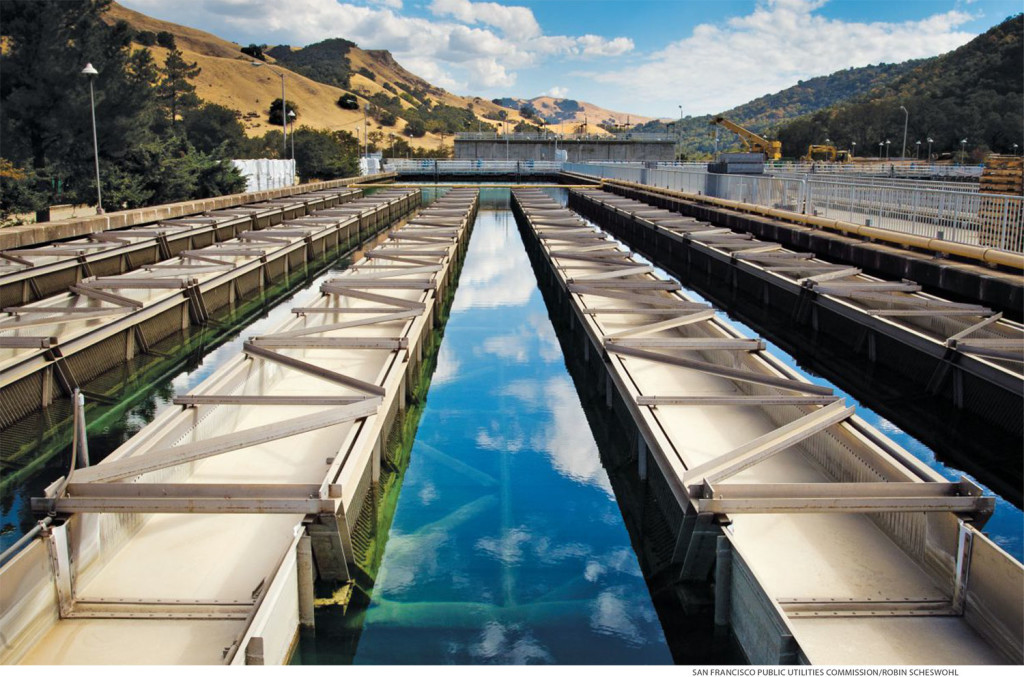
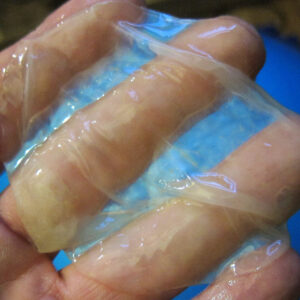
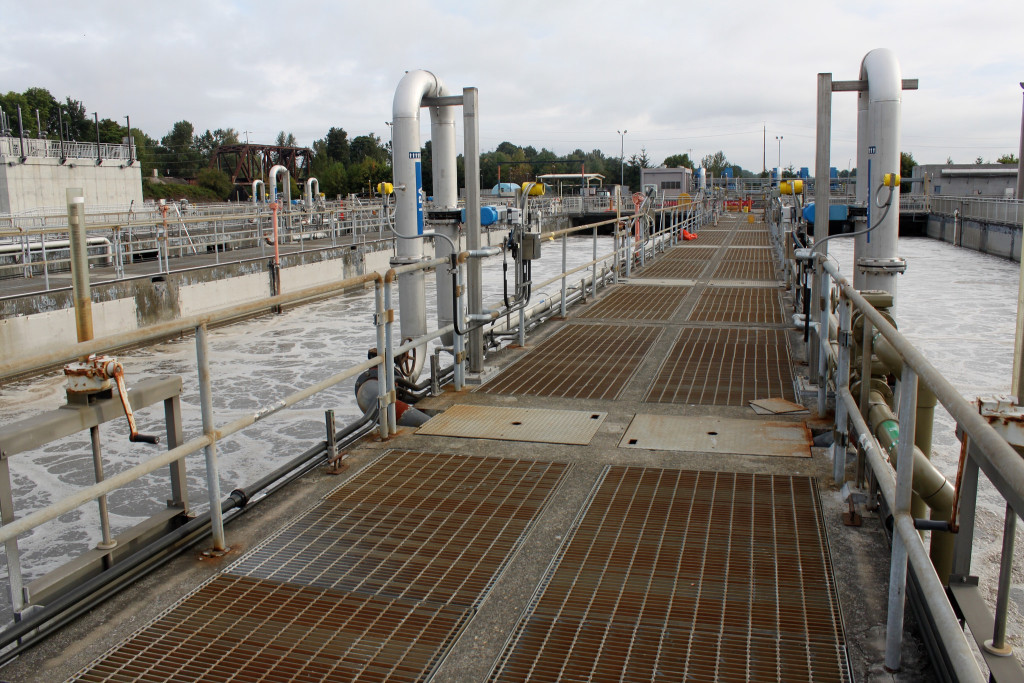
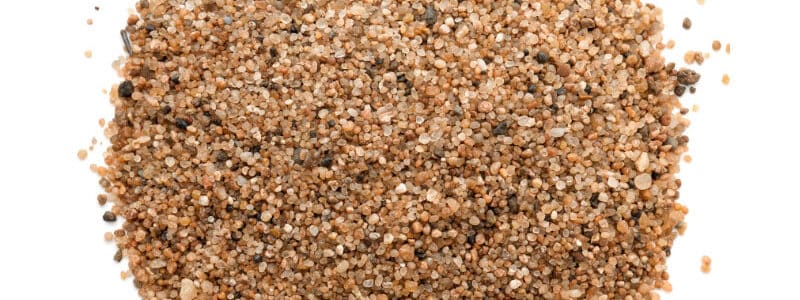
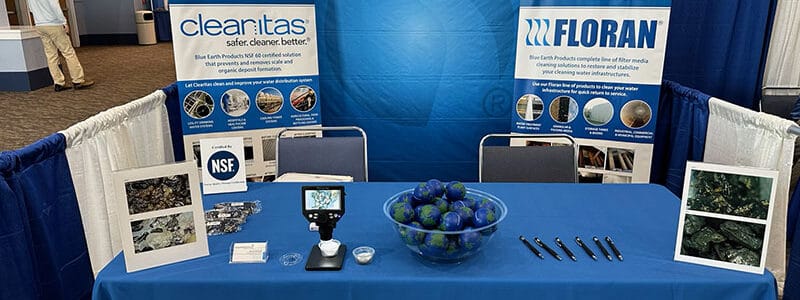
The city of Bellefontaine, Ohio recently called in Blue Earth Products to clean its water treatment equipment. The equipment was extremely dirty and performing poorly, but Blue Earth Products was able to effectively remove the accumulated scale and debris. Because of Blue Earth Products’ efforts, the city of Bellefontaine now enjoys improved equipment performance and monetary savings.

The Problem

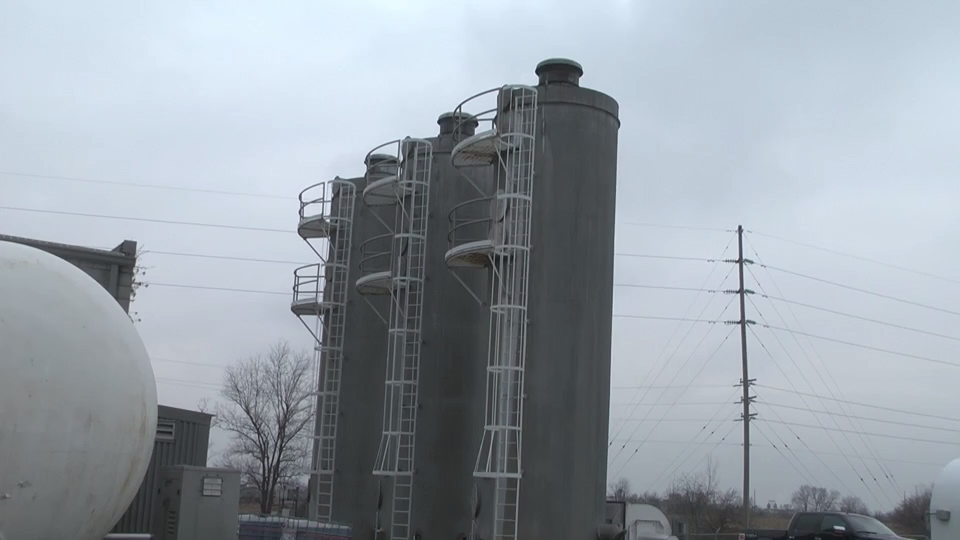
Before Blue Earth Products arrived in Bellefontaine, iron and manganese were fouling the city’s air stripping towers, in place to remove the VOCs that had contaminated the aquifers. In addition, the sand and anthracite pressure filters were compacted and cemented. Because of these issues, Bellefontaine was faced with the choice of either replacing the media or getting them cleaned. They chose chemical cleaning from Blue Earth Products over media replacement. According to Bellefontaine Water Superintendent Tim Newland, replacing the media would be very expensive. “In the VOC stripping towers, it takes $25,000 to replace the media in one tower alone,” Newland said. “With three towers, that’s $75,000 just for the media.” Newland states that Blue Earth Products was chosen for its reputation. “Blue Earth Products was highly recommended by other communities. We thought that they were the best fit for the city of Bellefontaine, and we brought them onboard. We have had an excellent working relationship with them,” says Newland.

The Blue Earth Products Solution

Bellefontaine brought in Blue Earth Products to clean four pressure filters and three air stripping towers. According to Blue Earth Products Regional Sales Manager Jeff Englum, Bellefontaine’s pressure filters work by pressurizing and cleaning the water as it passes through the media. When the media isn’t clean, the system doesn’t perform properly. To clean the anthracite and sand media thoroughly, Blue Earth Products began performing a thorough media analysis in a laboratory. Next, Blue Earth Products used this information to determine the best possible chemical cleaning solution for the media. In this case, Blue Earth Products applied Media Master® to clean the pressure vessels and rehabilitate the media in-place. In the air stripping towers, Blue Earth Products applied its patented products CSR Plus™ with Blue Earth Products Catalyst® to break up the iron and manganese scale that had accumulated inside the tower, a more cost-effective approach than replacing the tower media. As a result of Blue Earth Products’ efforts, the city of Bellefontaine continues to save, on average, $25,000 per air stripping tower.

Chemical Cleaning: A Cost-Effective Solution

Choosing chemical cleaning over media replacement allowed the city of Bellefontaine to save up to 50 percent on maintenance. According to Newland, the project provided considerable benefits to Bellefontaine with regard to the budget. “We’ve seen fantastic results budgetary wise. It’s been a big money savings to our budget to be able to come in annually and clean them compared to having to replace the filter media in each of those units,” he says. “We’ve got clean filters and clean stripping towers, which allows us to provide a better quality water.” Newland takes his position as Water Superintendent seriously, and he believes that Blue Earth Products has helped him provide better services to the community. “This project with Blue Earth Products is important because water is more than a resource – It’s a responsibility. It’s my responsibility to deliver water to the community, and it’s one of the greatest overlooked resources around,” says Newland. “By keeping these units clean, that helps me to do my part in delivering that clean, quality water.”

Blue Earth Products offers a number of useful, cost-effective products and services for water treatment facilities. To learn more about bringing Blue Earth Products to your facility, or if you would like to start saving on maintenance costs like the city of Bellefontaine did, be sure to contact Blue Earth Products today.

Blue Earth Products is featured in the March/April 2015 issue of Water Efficiency Magazine. This article highlights money-saving solutions to common filter, disinfection and disinfection byproduct problems and includes water treatment tips from Dane Madsen, CEO of Blue Earth Products. Some of the key points covered in the article are detailed below.

FILTER CLEANING

When it comes to filter cleaning, many different methods are available. However, some methods simply mask the real problem.​. Blue Earth Products provides an alternative approach to take the equipment offline and clean it in place. The best way to ensure that filters are properly cleaned is to remove organic and inorganic deposits with a product like Blue Earth Products’ former Floran® line.

BIOFILMS

Biofilms form within water storage tanks almost immediately after the water enters the reservoir. Although divers and remote-operated vehicles can clean the loose matter in tanks, they cannot effectively clean the tank walls. Blue Earth Products’ solutions remove the biofilm that attaches itself to the walls.

DISTRIBUTION SYSTEMS

Distribution systems face unique problems since they cannot be taken offline to be cleaned. Since they generate a large amount of disinfection byproducts (DBPs), distribution systems need to be thoroughly cleaned with a solution like Blue Earth Products’ Clearitas® product line that reduces DBPs by removing the mineral deposits that react with chlorine and improves the effectiveness of chlorine while the system remains online.
DOWNLOAD TWO-STEP CLEANING

 
Photo credit: San Francisco Public Utilities Commission/Robin Scheswohl
Photo credit: Charles de Mille-Isles / Foter / CC BY

Water system operators know that the buildup of biological and mineral deposits in a water system is unavoidable. Because of this issue, operators use multiple chemicals, such as disinfectants, sequestering agents, and scale inhibitors to ensure the safety of the water consumers receive while managing the impact of deposits in distribution systems. However, balancing the use of chemicals with the quality of water can be challenging.

Water Treatment Chemicals and DBPs

Although water treatment chemicals serve a clear purpose, some also produce disinfection byproducts, such as chlorite, bromate, haloacetic acids and trihalomethanes. Regulated by the Environmental Protection Agency DBPs are proven to cause cancer in some cases. Since October 2013, all public water utilities have been required to comply with the EPA Stage 2 Disinfectant and Disinfection By-Products Rule. These requirements mandate maximum averages for trihalomethanes and haloacetic acids, the leading disinfection byproducts while maintaining a chlorine residual of 0.2 mg per liter without exceeding chlorine dosage of 4.0 mg per liter at any point in the distribution system.

Controlling DBP Formation

Water entering a water distribution system after treatment is rarely above the maximum limit for DBPs. Thus, most DBPs that contaminate water form in the distribution system when the disinfectant continues to interact with the organic matter in “finished” water and with organic deposits and growth in the pipes. Because of the formation of scale and biofilms within the system, high levels of disinfectants may be required in order to maintain water quality. Unfortunately, increased usage of these chemicals leads to increases in DBP formation. Fortunately, advanced cleaning products like Clearitas® deposit control can reduce the need for chemicals and eliminate some of the problems they cause while still maintaining the quality of the system’s water.

Reducing DBPs with Clearitas

Clearitas is the stable patented product of an advanced electrochemical chlor-alkali process that removes both inorganic and organic deposits from water distribution systems by oxidizing the most stubborn biofilm and scale. It works in conjunction with traditional disinfectants, enhancing their effectiveness. Through breaking down and removal of scale and biofilms, which can harbor pathogenic and non-pathogenic bacteria that can be dangerous, affect taste and odor, consume residual disinfection, and decrease the overall quality of water, Clearitas is a unique and effective enhancement to any water system chemical plan and will help reduce distribution system-generated DBPs.

Clearitas Reduces The Amount Of Disinfectants Needed for Water To Be Safe

Because Clearitas enhances the effectiveness of traditional disinfectants that have already been added to the water distribution system by removing organic deposits in the distribution system and therefore a significant contributor to disinfectant “demand”, water distribution system operators can reduce the dose of disinfectant and eliminate other chemicals to keep water safe for consumers.

Clearitas Reduces The Need For Remediation

Likewise, because Clearitas addresses the issue of biofilms and scale, disinfectant demand and corrosion are reduced and scale is eliminated. Thus, operators are less likely to be forced to add additional chemicals for remediation.

Clearitas Doesn’t Increase Corrosivity

Clearitas can effectively remove mineral deposits from water without changing its corrosivity. Clearitas also removes iron and manganese bacteria tubercles, eliminating a significant source of corrosion. This leads to a lower demand for scale and corrosion inhibitors.

Clearitas Lowers The Production Of DBPs

Because Clearitas reduces the organic deposits in the distribution system that interacts with disinfectants and reduces the amount of disinfectant required to meet residual requirements, water distribution systems that use Clearitas will also enjoy lower concentrations of DBPs. This reduces safety concerns and simplifies compliance with EPA regulations.

Other Benefits

In addition to eliminating contaminants and reducing the need for chemicals in water distribution systems, Clearitas also improves the overall quality of water. It is a liquid, non-hazardous, NSF 60 certified drinking water additive. If you are interested in understanding if Clearitas can assist with your water treatment regimen, contact Blue Earth Products to learn more.
DOWNLOAD GETTING TO KNOW CLEARITAS
 
Photo credit: eliduke / Source / CC BY-SA

Sources: http://www.epa.gov/enviro/html/icr/gloss_dbp.html
https://blueearthproducts.com/wp/wp-content/uploads/2014/04/BlueEarthLabs_ScienceOfClearitas_2-1.28.14.pdf
http://water.epa.gov/drink/contaminants/basicinformation/disinfectants.cfm

Water loss is one of the most significant challenges faced by public water systems. Not only does water loss lead to financial problems for the system, but it can also contribute to health risks. Thus, it is important for public water systems to reduce water loss as much as possible. One effective strategy that can be used to reduce water loss involves improving the performance of flow meters.

Understanding Water Loss

Two basic types of water loss can exist within public water systems: real losses and apparent losses.

Real Losses

Real losses occur when water is released from the distribution system unintentionally. This most commonly occurs because of leaks, which may be present in distribution mains, storage tanks and service connections. Leaks can also occur when storage tanks overflow.

Apparent Losses

Apparent water losses occur when water is received by consumer but doesn’t generate revenue, either because of theft or an error. Either type of loss can be related to problems or inefficiencies with flow meters. For example, an accurate meter will help consumers and/or the water distribution itself identify leaks, which are the primary cause of real losses. Efficient metering can also prevent apparent losses by ensuring that all consumers are billed accurately.

How to Improve Meter Performance

Before attempting to improve the performance of flow meters, water supplies should begin by performing a comprehensive water loss audit. The goal of this audit is to determine how much of the water added to the system during the year is lost, either due to apparent losses or real losses. Having this information will allow the water supply to evaluate the effectiveness of any changes made to meter performance. Once the current amount of water loss has been calculated, the water supply can proceed by evaluating the current state of flow meters. Depending on the types of meters being used, water supplies may have the option of making repairs to existing meters or replacing them with new ones.

Repairing Meters

In some cases, public water systems may be able to improve meter performance and reduce water loss by making repairs to the meters that are currently installed. If meters haven’t been working properly, repairing them may address some of the inaccuracies and reduce water loss.

Replacing Meters

If meters are broken or outdated, replacing them is typically the best option. When choosing replacement meters, water systems can choose from several options, including:

  • Velocity meter- Velocity meters measure the velocity of water moving through the meter in order to determine usage. These meters are fairly accurate a low flow rates, although some water loss can still occur.
  • Positive displacement meter- Positive displacement meters are more accurate than velocity meters at low to moderate flow rates, but they are still not the most accurate meter available.
  • Fluidic oscillator meter- These meters less likely to experience problems due to debris in the water system than many other types of meters, but water loss may occur at low flow rates.
  • Ultrasonic meter- Ultrasonic meters are highly effective and won’t lose accuracy over time. However, they do require a significant amount of energy in order to operate.
  • Compound meter- Compound meters can be used even in locations with highly variable flow, thus preventing water loss for all flow levels. However, compound meters may be susceptible to clogs.
  • Magnetic flow meter- One of the most effective and durable meters on the market, the magnetic flow meter loses no accuracy over time and can measure low, moderate and high flows.

Regardless of the type of meter chosen, it is important to perform regular maintenance and repairs when needed in order to ensure the meter’s continued accuracy. After upgraded meters have been in operation for a significant period of time, public water system can evaluate their effectiveness by calculating water loss and comparing values to the estimates made during the initial audit.

Sources:

http://water.epa.gov/type/drink/pws/smallsystems/upload/epa816f13002.pdf

http://sensus.com/documents/10157/51976/sensus-building-intelligence-into-water-metering-white-paper.pdf/5bd14d08-6211-497c-9364-543f173605ce

http://www.wwdmag.com/meter-reading-products-automatic/drop-drop-water-loss-prevention

Access to safe, clean water is a luxury that is often taken for granted. Because immediate access to water is available in virtually every modern building, many people forget just how complicated the water treatment and distribution process can be. In addition, many people also fail to realize how dangerous water can be to consumers if it becomes contaminated at any point during this process. After exiting a treatment plant, water spends the majority of its time in the distribution system of the facility where it will eventually be consumed. Thus, in order to prevent contamination and protect public health, clean water distribution systems are essential.

Understanding the Need for Maintenance

In order to be safe for human consumption or use, water must meet certain standards. In most cases, water meets these standards when it leaves the treatment plant. However, if the water distribution system it enters has not been properly cleaned or maintained, the water may decrease in quality before it reaches the consumer. Dirty distribution systems have a high potential for scaling, as well as biofilm formation. This can lead to the following water-related issues:

  • Low chlorine residualschild drinking water
  • Taste and odor changes
  • Unsafe levels of disinfectant by-products
  • Discoloration or visible dirt
  • Proliferation of waterborne pathogens

Perhaps the most worrisome of these problems is the proliferation of pathogens, such as Legionella pneumophila. These bacteria can cause serious illnesses in humans. Fortunately, all of the problems above, including the growth of bacteria, can be effectively avoided through proper maintenance and cleaning protocols.

Water Distribution System Maintenance Tips

To improve the quality of water and protect the health of consumers, facilities should follow the tips below.

1. Inspect/monitor source water.

Understanding the characteristics of the water that enters a distribution system allows personnel to plan treatment efforts based on the events that are most likely to occur within the system. Facilities should examine the makeup of the source water to gain insight about the water’s potential for:

  • Biological growth
  • Scaling
  • Corrosion
  • Generation of disinfectant byproducts

Inspections should be performed on a regular basis and any time the source water quality changes.

2. Choose the right technique.

A variety of water distribution system cleaning techniques are available. These techniques include:

Mechanical Cleaning:

Mechanical cleaning methods utilize various tools to scrape the interior surfaces of the water mains with the goal of removing scale and other unwanted materials. In order to clean a water distribution system mechanically, the portion of the system being cleaned must be taken offline. Sediment disposal and excavation are also required.

Pigging and Swabbing:

Pigging and swabbing is a method of pipe cleaning that employs small pieces of polyurethane propelled by water. These polyurethane fragments, which are known as “pigs,” can effectively remove biofilm, sediment and scale. As with mechanical cleaning, pigging and swabbing can only be performed on pipes that are offline.

Main Flushing:

Main flushing is the most common method used to maintain water distribution systems. During main flushing, a high pressure flow of water moves through the pipes in order to remove debris, increase chlorine residuals and reduce disinfectant byproducts. Two primary types of flushing exist: conventional flushing and unidirectional flushing. While conventional flushing utilizes all available flow pathways, unidirectional flushing isolates flow and reverses its normal pattern. Because flow rates decrease as distance from the flushing hydrant increases, conventional flushing isn’t an effective method for removing biofilm or sediment. Unidirectional flushing, on the other hand, provides better results.

Chemical Cleaning:

Chemical cleaning methods involve the use of chemicals to remove sediment, loosen biofilms and improve water quality. Depending on the chemicals utilized, treatments can be used to increase the effectiveness of mechanical cleaning methods, or they can be used on their own. When the proper chemicals are applied, these methods can be very effective at eliminating pathogens. In some cases, chemical cleaning methods can even be used to clean pipes that remain online.
Sources
Photo credit: zayzayem / Foter / CC BY-SA
Photo credit: Sacca / Foter / CC BY-SA
https://blueearthproducts.com/wp-content/uploads/2014/08/Blue-Earth-January-2014.pdf
To remove harmful or unwanted components from water distribution systems, the addition of chemicals is often required. However, adding these chemicals can lead to a host of problems, such as high levels of disinfectant byproducts. Fortunately, water distribution systems can now ensure the quality of water while simultaneously reducing the need for chemicals by utilizing Clearitas, a revolutionary product developed by Blue Earth Labs.

What is Clearitas?

Clearitas is a specialized, potent formulation of oxidized chlorine. It has been developed for the specific purpose of removing both inorganic and organic deposits from water distribution systems. This compound works by enhancing the power of traditional sanitizers and disinfectants added to the system, as well as by facilitating the breakdown of biofilms and scale.

How Clearitas Reduces the Need for Chemicals

Clearitas reduces the need for chemicals in two different ways.

1. Clearitas enhances the effectiveness of chemicals already in the system.

When added to the water distribution system, Clearitas enhances the effectiveness of traditional sanitizers and disinfectants. This reduces the need for extra chemicals by allowing operators to accomplish the same goals with a smaller amount of the chemical in question.

2. Clearitas reduces the need for additional chemicals over time.

When formed within a water distribution system, scale and biofilm become a breeding ground for dangerous pathogens. When these pathogens are found in water, additional chemicals must be added to remove them. Because Clearitas can break down and eliminate both scale and biofilm, the need for additional chemicals is reduced.

Benefits of Adding Fewer Chemicals

When Clearitas reduces a water distribution systems use of chemicals, several benefits result:

Overhead expenses are reduced.

The chemicals that must be added to water for sanitization and/or disinfection purposes can be costly. Because Clearitas reduces the need for these chemicals, overhead expenses will be reduced as well.

DBP levels decrease.

When added to a water distribution system, disinfectants react with inorganic and organic materials found in the water to produce disinfectant byproducts, or DBPs. DBPs can be dangerous for consumers, so the Environmental Protection Agency regulates their presence in public water systems. Clearitas reduces the need for chemicals, which in turn decreases DBP levels and increases water safety.

Customer satisfaction increases.

For most customers, the idea of adding chemicals to drinking water is off-putting. Clearitas reduces the amount of chemicals that must be added, thus increasing customer satisfaction.

Other Benefits of Clearitas

The reduction in added chemicals is only one of the benefits of treating water distribution systems with Clearitas. This product offers a number of other advantages as well, including:

  • Remediation of Waterborne Pathogens – Clearitas can be used to eliminate waterborne pathogens, such as Legionella, which may cause severe illness among consumers.
  • Improved Water Quality – Clearitas improves the overall quality of water moving through the distribution system.
  • No Change to Corrosively – Clearitas is capable of eliminating mineral deposits from water without changing its corrosivity.
  • Controlled Removal of Scale and Biofilms – Operators can control the dosing rate of Clearitas so that biofilms and scales are removed slowly, thus causing no problems with the quality of water.
  • Wide Range of Uses – Clearitas can be used successfully in a variety of settings, including agriculture, healthcare facilities, food processing facilities, water treatment facilities and cooling towers.

Clearitas is available in several product formulations that have been designed for specific applications. To learn more about bringing this product to your facility or water supply, contact Blue Earth Labs.

Sources:

http://www.epa.gov/enviro/html/icr/gloss_dbp.html

CLEARITAS®

https://blueearthproducts.com/wp/wp-content/uploads/2014/04/BlueEarthLabs_ScienceOfClearitas_2-1.28.14.pdf